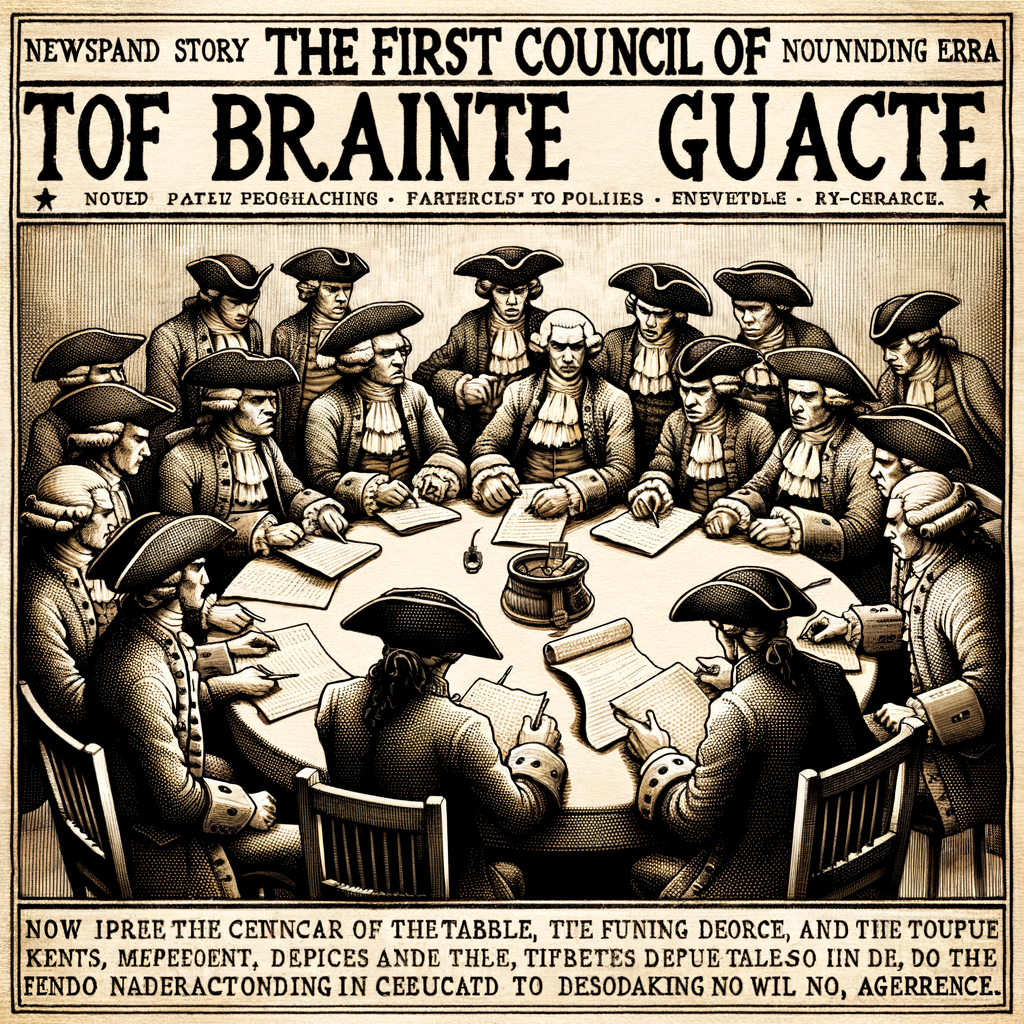
The council was held in the open air because no building existed large enough to contain both the delegates and their egos. Captain Blackwater set a table on the beach—a door torn from a Spanish galleon, balanced on rum barrels—and invited the faction leaders to sit.
The Frestagon Compact sent Admiral Crane, a man whose silences were more threatening than most men's shouts. The Corsair Collective sent Maria de Vega, who ran their finances and understood that money was just another form of violence. The Free Mariners sent Old Tobias, who claimed to want nothing and usually got everything.
Blackwater opened the council with a question: "Who owns this harbor?"
The argument lasted three days.
Crane wanted military governance—a council of captains with himself at its head. De Vega proposed a trading charter that would give the Collective a 40% tariff on all goods. Old Tobias suggested they simply share everything, which everyone recognized as a negotiating tactic rather than a philosophy.
On the third day, Greydon Salt—who had not been invited to speak—stood up and read aloud from his ledger. He listed the costs of dock construction, water supply, and fortification. He calculated the revenue from projected trade routes. He demonstrated, with mathematical precision, that no single faction could afford to build and defend the harbor alone.
"You need each other," he said. "The numbers are clear."
The Brine Compact was signed that evening. It established shared governance, proportional dock allocation, and a harbor tax of 3% on all cargo. It also established the role of Harbor Master as a neutral office, answerable to no faction.
Greydon Salt was appointed to the position. He accepted with a nod and returned to his ledger.
The compact held for eleven years. When it finally broke, it was not over money or territory but over a secret that only four people knew—a secret about the land beneath their feet and who had been there before them.
Founding Era (1725)
0 skulls
☼ Diversion
Whispers in the Shadows
In the murky depths of our fair port city, the Lantern Syndicate weaves a web of secrets and shadows.
Read the tale →